Launching a Meme Coin Yourself vs Buying One
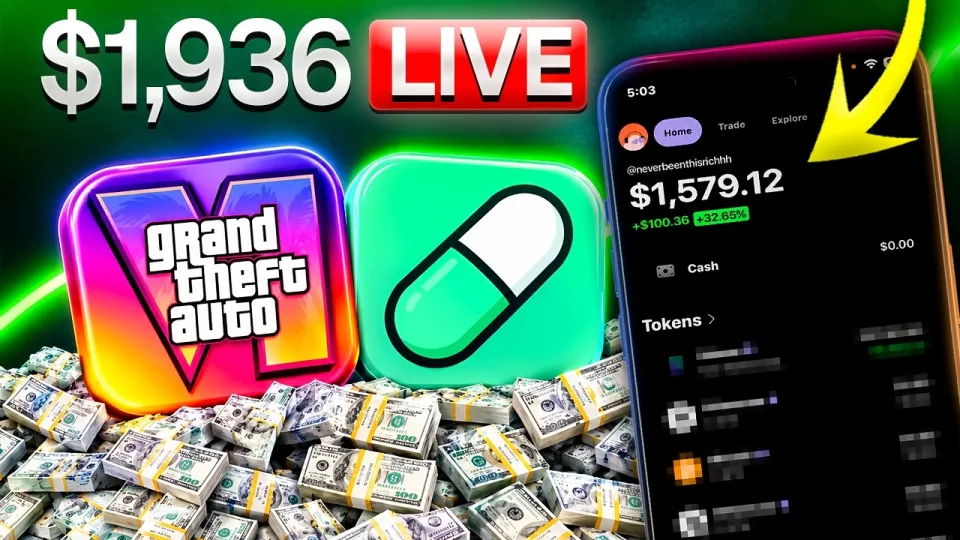
Video: GTA 6 Meme Coins: How to Launch a Meme Coin on Pump.fun ($80 → $1,500)
· based on the channel Christie Visuals
To launch a meme coin, you create a Solana token with a name, ticker and image, then seed a liquidity pool so others can buy it — a process that takes minutes on Pump.fun-style rails and can be done through a launch site such as mintmeme.dev, which bundles token creation and one-click copying of trending coins into a Raydium pool. The creator, not the buyer, controls supply, timing and the first liquidity position, which is why launching is a different game from aping into someone else's chart.
The GTA 6 meme coin wave is a useful case study: tokens like CyberLeek and DacityCoin moved fast after the game's launch, and the same playbook — find the meta, mint, add liquidity, watch the chart — applies to any narrative that is trending on X right now.
Why launching a meme coin beats buying one
A trader buying a meme coin is competing against bots, snipers and the dev's own wallet; a dev sets the terms of the game. When you launch, you hold the entire initial supply, you decide how much goes into the liquidity pool, and you decide when to pull it. That asymmetry is the whole reason people learn how to create a meme coin instead of chasing pumps.
The trade-off is real: you take on the work of marketing, you carry the reputational risk if the token dumps, and you are the one legally and financially exposed if the launch is treated as a securities offering in your jurisdiction. Launching does not remove risk — it moves risk from "I bought at the top" to "I am responsible for the pool."
Finding the GTA 6 meme coin meta on X
Meme coin metas are discovered on X before they show up on aggregators, so search the narrative first and the ticker second. In practice that means searching the game name plus words like "coin", "sol" or "pump", sorting by Latest rather than Top, and looking at which accounts are posting repeatedly rather than once.
Signals that a narrative has legs:
- Multiple independent accounts posting the same joke format within a few hours.
- Existing tokens in the category already showing volume on a chart, not just replies.
- A clear, reusable image or character — a leek, a mascot, a leaked-looking screenshot — that can become a logo.
- No dominant token yet holding the whole narrative.
Signals that it is already over: the same three accounts posting every hour, a token already at a large market cap with no new entrants, or a narrative that peaked days ago and is only being recycled.
How to launch a meme coin on Solana step by step
A Solana meme coin launch is four actions: wallet, token, pool, chart. Set up a Phantom wallet first and fund it with SOL — that wallet pays the mint and pool costs and later receives trading fees.
- Create the token. On the launch platform, enter the name, the ticker symbol and upload a square image. Keep the ticker short and readable; long tickers get mistyped in searches and lose volume.
- Use the trending-coin shortcut if you want speed. Launch sites that offer a "copy trending coins" feature let you clone an existing meme coin's parameters — supply, pool settings — and send it straight to Raydium in one click instead of configuring each field manually.
- Create the liquidity pool. This is the step that makes the token tradeable. You deposit your tokens plus SOL into a Raydium pool; the ratio you choose sets the opening price. A typical small launch puts most of the supply in the pool and keeps a reserve.
- Verify on a chart. Open the token in Photon (or any Solana charting tool) and confirm the pool exists, the price is quoted, and trades are landing.
- Watch the first hour. Volume in the first 30–60 minutes tells you whether the narrative is converting into buyers or whether you are the only participant.
Managing liquidity and the numbers behind a launch
The showcased run started with roughly $80 and ended near $1,500 by managing the pool rather than by holding and hoping. That outcome is a best case, not an average — but the mechanics behind it are repeatable and worth understanding.
- Initial liquidity sets the price. Fewer tokens paired with the same SOL means a higher opening price and a thinner book; more tokens means a lower price and more room for buyers.
- Trading fees accrue to liquidity providers. Every swap in the pool pays a small fee, so a token with steady volume earns even if the price goes sideways.
- Partial withdrawals are the exit. Removing a slice of liquidity as buyers arrive converts paper gains into SOL; removing all of it at once is what traders call a rug and it kills the token permanently.
- Slippage cuts both ways. In a thin pool, a large buy moves the price hard — good for you as a provider, brutal for the buyer who arrives late.
Budget realistically: the $80 figure covered token creation plus a minimal pool. A pool that can absorb real volume usually needs more SOL, and any amount you add should be money you can lose entirely.
Common questions and doubts before a first launch
The most frequent hesitation is whether launching is worth the effort compared with simply trading. The honest answer: launching gives you control and fees, but it also makes you the counterparty to everyone who buys — if the narrative dies, you are holding the bag along with them.
Other recurring concerns:
- "Do I need coding skills?" No. Launch sites handle the mint and the pool creation through a form; a Phantom wallet and some SOL are the only technical prerequisites.
- "What if nobody buys?" Then the pool sits there. You can withdraw your liquidity and recover most of the SOL, minus fees and any price movement.
- "Is this legal?" Rules vary by country and promoting a token can trigger securities, consumer-protection or tax obligations. Check your local rules before marketing a launch publicly.
- "Can I launch on other chains?" Yes, but Solana's low fees and fast confirmation are why Pump.fun-style launches dominate the meme coin market.
Conclusion
Launching a meme coin is a mechanical process — wallet, token, Raydium pool, chart — wrapped in a judgment problem: picking a narrative early enough to matter. The GTA 6 category shows how quickly a meta forms around a single event and how fast it can rotate away, which is why the pool and the exit plan matter more than the logo. Christie Visuals walks through the full workflow, from the CyberLeek story to the live Photon chart and the $80 → $1,500 result, and the tools used in that breakdown are available at mintmeme.dev if you want to run the process yourself. Treat every launch as an experiment with money you can afford to lose, and never market a token you would not buy.
Key takeaways
- Launching a meme coin on Solana takes minutes: pick a name, ticker and image, then create the token and seed a Raydium liquidity pool.
- The creator keeps the initial supply, so a small budget (around $80 in the showcased run) can fund the first liquidity position.
- Meme coin metas rotate fast: the GTA 6 category, including tokens such as CyberLeek and DacityCoin, is the example used for finding ideas on X.
- A live chart on Photon shows pool activity immediately after launch, which is how you judge whether the token is getting real volume.
- Meme coins are extremely high risk and most launches fail; only capital you can afford to lose should go into a pool.
Questions & answers
How much money do I need to launch a meme coin on Solana?
A minimal launch can be done for under $100 in SOL, which covers the token mint and a small initial Raydium liquidity position — the showcased run started at about $80. That budget produces a very thin pool where small trades move the price sharply, so most creators add more SOL if they expect real volume.
Do I need to know how to code to create a meme coin?
No. Launch platforms handle the token mint and the Raydium pool creation through a web form: you enter a name, a ticker and an image, connect a Phantom wallet, and confirm the transactions. The only technical requirements are a funded Solana wallet and a basic understanding of how liquidity affects price.
What happens to my tokens if nobody buys the coin?
The tokens stay in the liquidity pool and the price simply does not move. You can withdraw your liquidity and recover most of the SOL you deposited, minus network fees and any price change caused by your own withdrawal. The launch cost itself — mint and pool creation — is not recoverable.
Is launching a meme coin legal and is it risky?
Legality depends on your jurisdiction: promoting a token publicly can trigger securities, consumer-protection and tax rules, so check local regulations before marketing a launch. The financial risk is separate and severe — meme coins are extremely volatile, most launches fail, and you can lose the entire amount you put into the pool.
Source: GTA 6 Meme Coins: How to Launch a Meme Coin on Pump.fun ($80 → $1,500) · Markdown version